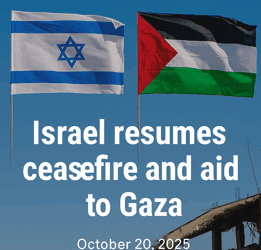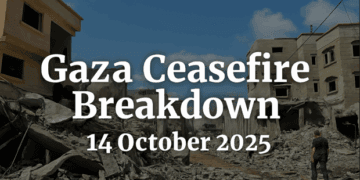










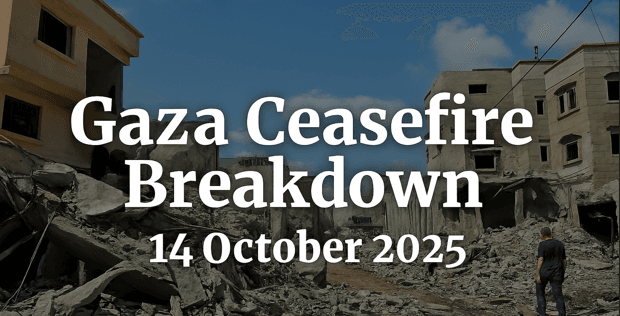
The Gaza ceasefire 2025, brokered just days ago, has already begun to unravel. On 14 October, renewed violence erupted in Gaza City, resulting in the deaths of at least five Palestinian civilians, including two children. Israeli military operations targeted suspected militant hideouts, but local health officials report that residential areas were hit, sparking outrage and international concern.
Background of the Ceasefire Agreement
Last Friday, Egypt and Qatar facilitated a ceasefire deal between Israel and Hamas following weeks of escalating violence. The agreement included provisions for halting airstrikes, releasing hostages, and allowing humanitarian aid into Gaza. Initial optimism quickly faded as both sides accused each other of violating the terms.
Humanitarian Crisis Deepens
UN agencies estimate that over 2 million people in Gaza remain at risk of starvation, dehydration, and medical collapse. Hospitals are operating at minimal capacity due to fuel shortages and damaged infrastructure. Aid convoys have entered through the Rafah crossing, but logistical bottlenecks and security concerns have slowed distribution.
Ceasefire Violations and Military Activity
Israeli officials claim that militants fired rockets into southern Israel, prompting retaliatory strikes. Palestinian groups allege unprovoked raids and detentions in civilian zones. The lack of third-party monitoring has made it difficult to verify claims, fueling mistrust and further escalation.
International Response and Diplomatic Pressure
The United Nations has called for an emergency Security Council meeting. Human Rights Watch and Amnesty International have urged both parties to respect international humanitarian law. The United States and European Union have reiterated support for a two-state solution but stopped short of condemning either side.
Impact on Civilians
In Gaza, families are fleeing urban centers for rural shelters, many of which lack basic amenities. Schools have been converted into emergency shelters, and food prices have surged due to supply chain disruptions. Psychological trauma is widespread, especially among children exposed to repeated airstrikes.
Media and Information Warfare
Both sides have ramped up media campaigns to shape global narratives. Israeli outlets emphasize national security and counterterrorism, while Palestinian media highlight civilian suffering and displacement. Social media platforms are flooded with conflicting footage, making it difficult for international observers to assess the situation objectively.
Regional Reactions
Lebanon and Jordan have condemned the violence and called for restraint. Turkey has offered to mediate, while Iran has pledged support to Palestinian factions. Egypt remains the primary diplomatic channel, urging both sides to recommit to the ceasefire and allow uninterrupted humanitarian access.
Table: Key Ceasefire Terms and Status
| Ceasefire Provision | Status | Remarks |
|---|---|---|
| Halt to Airstrikes | Violated | Multiple strikes reported in Gaza City |
| Release of Hostages | Partial | 3 hostages released; 12 remain |
| Humanitarian Access | Limited | Convoys delayed due to fuel shortage |
| Third-Party Monitoring | Absent | No neutral observers deployed |
Economic Fallout
Gaza’s economy, already fragile, is facing collapse. Markets are closed, banking services disrupted, and unemployment is surging. Israel has tightened border controls, affecting trade and remittances. International donors are preparing emergency relief packages, but long-term recovery remains uncertain.
Political Ramifications
In Israel, the government faces criticism from opposition parties for failing to secure lasting peace. In Gaza, internal divisions among Palestinian factions are resurfacing, with some accusing Hamas of mishandling negotiations. The breakdown of the ceasefire could reshape political alignments in both territories.
Role of Technology and Surveillance
Drone surveillance and satellite imagery have played a key role in targeting operations. However, concerns have been raised about the accuracy of intelligence and the risk of civilian casualties. NGOs are calling for transparency in the use of AI-based targeting systems.
Calls for Accountability
International legal bodies are considering investigations into potential war crimes. The International Criminal Court has received preliminary reports from human rights organizations. Both Israeli and Palestinian authorities deny wrongdoing and accuse each other of propaganda.
Voices from the Ground
Local journalists and aid workers describe scenes of devastation. “We are running out of medicine, food, and hope,” said a doctor at Al-Shifa Hospital. Residents report constant fear, sleepless nights, and the sound of drones overhead. Community leaders are urging global media to amplify their voices.
Outlook and Next Steps
As diplomatic efforts intensify, the future of the Gaza ceasefire 2025 remains uncertain. Analysts warn that without neutral enforcement and sustained humanitarian support, the region could slide into prolonged conflict. The next 72 hours are critical for restoring calm and preventing further loss of life.
Conclusion
The breakdown of the Gaza ceasefire 2025 is a stark reminder of the fragility of peace in conflict zones. Civilian lives hang in the balance as political agendas clash. The international community must act swiftly and decisively to protect vulnerable populations and uphold the principles of humanitarian law.