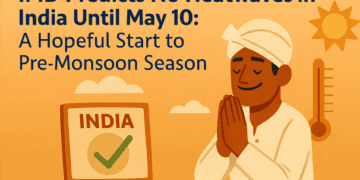









In a welcome development for millions across India, the India Meteorological Department (IMD) has forecasted Heatwaves in India May 10, 2025. This announcement comes as a relief amid growing concerns over climate volatility and rising summer temperatures. With the pre-monsoon season underway, the IMD’s guidance offers a window of comfort and stability for farmers, urban planners, and health authorities.
Understanding the Forecast
According to the IMD’s latest bulletin, no significant heatwave conditions are expected across the country until May 10. This forecast is based on current atmospheric models, temperature trends, and wind patterns observed across key regions. While isolated warm days may occur, they are unlikely to meet the threshold for heatwave classification.
Heatwave Criteria by IMD
- Maximum temperature ≥ 40°C in plains, ≥ 37°C in coastal areas, ≥ 30°C in hilly regions
- Departure from normal temperature ≥ 4.5°C
- Persistence for at least two consecutive days
Regional Breakdown
The IMD’s regional centers have reported moderate temperature trends across most states. Northern India, which typically experiences early heatwaves, is currently witnessing below-normal temperatures due to western disturbances and cloud cover.
| Region | Current Avg Temp (°C) | Heatwave Risk |
|---|---|---|
| Delhi-NCR | 34.2 | Low |
| Rajasthan | 36.5 | Moderate |
| Maharashtra | 33.8 | Low |
| Odisha | 35.1 | Low |
| Telangana | 34.7 | Low |
Implications for Agriculture
The absence of heatwaves during early May is particularly beneficial for India’s agricultural sector. Farmers preparing for kharif sowing can expect more favorable soil moisture levels and reduced crop stress. This window also allows for better irrigation planning and pest control.
Benefits for Farmers
- Reduced risk of crop wilting and dehydration
- Improved germination rates for early sowing
- Lower irrigation demand and water savings
- Favorable conditions for fertilizer application
Urban and Public Health Impact
Heatwaves pose serious health risks, especially in densely populated urban areas. The IMD’s forecast allows municipal bodies to focus on long-term heat mitigation strategies rather than emergency response. Hospitals and clinics can also prepare for seasonal illnesses without the added burden of heat-related cases.
Urban Planning Advantages
- Reduced heatstroke and dehydration cases
- Lower electricity demand for cooling
- Opportunity to implement green cover and water conservation projects
- Improved air quality due to lower thermal inversion
Climate Context and Trends
India has witnessed an increase in heatwave days over the past decade, attributed to global warming and urbanization. The IMD’s short-term forecast offers temporary relief, but long-term trends suggest a need for adaptive strategies.
Historical Heatwave Data
- 2022: 280 heatwave days across India
- 2023: 312 heatwave days, highest in two decades
- 2024: Slight decline due to El Niño moderation
Government Response and Preparedness
The Ministry of Earth Sciences and state governments have welcomed the IMD’s forecast. Advisory bulletins have been issued to district administrations, urging them to continue awareness campaigns and maintain readiness for sudden temperature spikes.
Key Measures in Place
- Heat Action Plans in 23 states
- Mobile alerts and public advisories via IMD app
- Coordination with health departments and disaster management teams
- Deployment of water tankers and cooling shelters in vulnerable zones
Voices from the Ground
Farmers, healthcare workers, and city residents have expressed cautious optimism. While the forecast is encouraging, many stress the importance of continued vigilance and climate resilience.
Quotes
- “This gives us breathing room to prepare our fields,” – Ramesh Pawar, farmer in Vidarbha
- “We’re seeing fewer heatstroke cases this week,” – Dr. Meena Joshi, Pune Municipal Hospital
- “It’s a good time to expand our rooftop garden project,” – Anjali Verma, urban planner, Delhi
Looking Ahead: Post-May Outlook
While the IMD has ruled out heatwaves until May 10, the latter half of May and June could still see temperature spikes. The department will continue to monitor conditions and issue updates as needed. Citizens are advised to stay hydrated, avoid peak sun hours, and follow local advisories.
Expected Trends
- Gradual temperature rise in Central and Northwest India
- Possible heatwave alerts in Rajasthan, Gujarat, and Madhya Pradesh post-May 15
- Monsoon onset expected in Kerala by June 5
Conclusion
The IMD’s prediction of no heatwaves until May 10 offers a rare moment of climatic stability in an otherwise unpredictable summer. It’s a chance for India to breathe, plan, and prepare. Whether in fields, cities, or policy circles, this forecast is a hopeful start to the pre-monsoon season—and a reminder of the value of timely, science-based guidance.
Postscript: Stay Informed
Citizens can access daily weather updates, heatwave alerts, and agricultural advisories through the IMD’s Heatwave Guidance Portal. Staying informed is the first step toward staying safe.