







📈 Farm Sector Growth in Q1 FY26
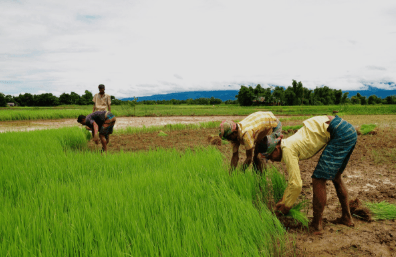
India’s farm sector Gross Value Added (GVA) recorded growth in Q1 FY26, signaling resilience in agriculture despite global challenges. According to government sources, strong crop output and policy support are driving rural income growth.
💰 GST Relief Under Discussion
The government is actively considering lowering GST on agricultural inputs such as fertilizers, pesticides, and machinery. Officials believe this step could boost farmer incomes by reducing production costs and encouraging greater adoption of modern inputs.
🌱 GM Cotton and HtBt Seeds Approved
In a major policy decision, the government has cleared the use of genetically modified (GM) cotton and herbicide-tolerant Bt (HtBt) seeds. These are expected to:
Improve yields.
Reduce weed-control costs.
Strengthen India’s competitiveness in global cotton markets.
🌽 Focus on Maize Production
To diversify crops and meet rising demand from the poultry and ethanol sectors, the government is placing special emphasis on increasing maize cultivation and productivity.
🌍 India-UK CETA Talks to Boost Exports
India and the UK are preparing for Comprehensive Economic and Trade Agreement (CETA) negotiations, which could open new opportunities for Indian food exports. Agricultural products are expected to play a key role in the discussions.
🏢 Strengthening Farmer Producer Organizations (FPOs)
The government is also focusing on Farmer Producer Organizations (FPOs) to:
Formalize agricultural trade.
Enhance farmer bargaining power.
Increase farm output through collective marketing and better access to credit.

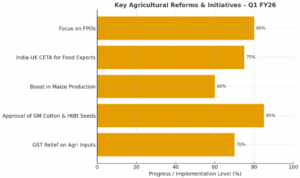
Here’s a visual summary chart of the key agricultural reforms and initiatives in Q1 FY26 – highlighting GST relief, GM seeds approval, maize production push, India-UK CETA, and FPOs.