











Vegetable Oil Imports Rise 21 Percent
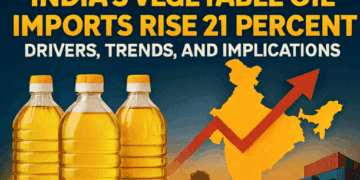
India’s vegetable oil imports have surged by 21% in the current fiscal year, driven by rising domestic consumption, global price corrections, and seasonal demand spikes. As the world’s largest importer of edible oils, India’s import dynamics have far-reaching implications for trade, agriculture, and food security.
Import Breakdown by Oil Type
- Palm Oil: Accounts for over 55% of total imports, sourced mainly from Indonesia and Malaysia
- Soybean Oil: Up by 18%, with major shipments from Argentina and Brazil
- Sunflower Oil: Rebounding post-Ukraine crisis, with imports up 12%
- Mustard & Groundnut Oil: Domestic production remains stable but insufficient
This diversification reflects India’s strategy to balance price, availability, and geopolitical risks.
| Oil Type | Share in Imports | Key Source Countries | YoY Growth |
|---|---|---|---|
| Palm Oil | 55% | Indonesia, Malaysia | +21% |
| Soybean Oil | 25% | Argentina, Brazil | +18% |
| Sunflower Oil | 12% | Ukraine, Russia | +12% |
| Mustard & Groundnut Oil | 8% | Domestic | Stable |
Key Drivers Behind the Surge
Several factors have contributed to the sharp rise in imports:
- Festive Demand: Diwali and wedding season boost household consumption
- Price Correction: Global edible oil prices have softened, making imports more viable
- Low Domestic Output: Erratic monsoon and pest attacks affected oilseed yields
- Changing Diets: Urban consumers shifting toward refined and blended oils
State-Level Consumption Trends
Consumption patterns vary across regions:
- Punjab & Haryana: High demand for mustard and soybean oil
- Maharashtra & Gujarat: Palm and groundnut oil dominate
- Southern States: Sunflower and coconut oil preferred
- Eastern India: Palm oil remains the staple due to affordability
Trade and Tariff Implications
The surge in imports has prompted policy reviews:
- Import duties on crude palm oil reduced to stabilize prices
- Refined oil tariffs adjusted to protect domestic refiners
- Negotiations underway with ASEAN and Latin American exporters
These measures aim to balance consumer affordability with farmer protection.
Impact on Domestic Oilseed Sector
While imports meet short-term demand, they pose challenges for India’s oilseed farmers:
- Price suppression due to cheaper imports
- Reduced incentive for crop diversification
- Need for better procurement and MSP coverage
Experts suggest boosting mustard, soybean, and groundnut cultivation through targeted subsidies and extension services.
Global Market Dynamics
India’s import surge is influencing global edible oil markets:
- Indonesia and Malaysia ramping up palm oil exports
- Argentina offering long-term soybean oil contracts
- Ukraine and Russia stabilizing sunflower oil supply chains
India’s purchasing decisions are now a key factor in global pricing and trade flows.
Consumer Preferences and Health Trends
Urban consumers are increasingly opting for blended oils and low-cholesterol variants. Brands are promoting rice bran, olive, and canola oils as premium alternatives. However, affordability remains a key driver in rural markets, where palm and soybean oils dominate.
Policy Recommendations
To manage the import surge and support domestic production, experts recommend:
- Strengthening oilseed MSP and procurement infrastructure
- Promoting crop insurance and climate-resilient varieties
- Encouraging private investment in oilseed processing
- Launching awareness campaigns on healthy oil consumption
Conclusion
India’s 21% rise in vegetable oil imports reflects a complex interplay of domestic demand, global supply chains, and policy choices. While imports offer short-term relief, long-term sustainability will depend on revitalizing the domestic oilseed ecosystem. A balanced approach is essential to ensure food security, farmer welfare, and consumer health.